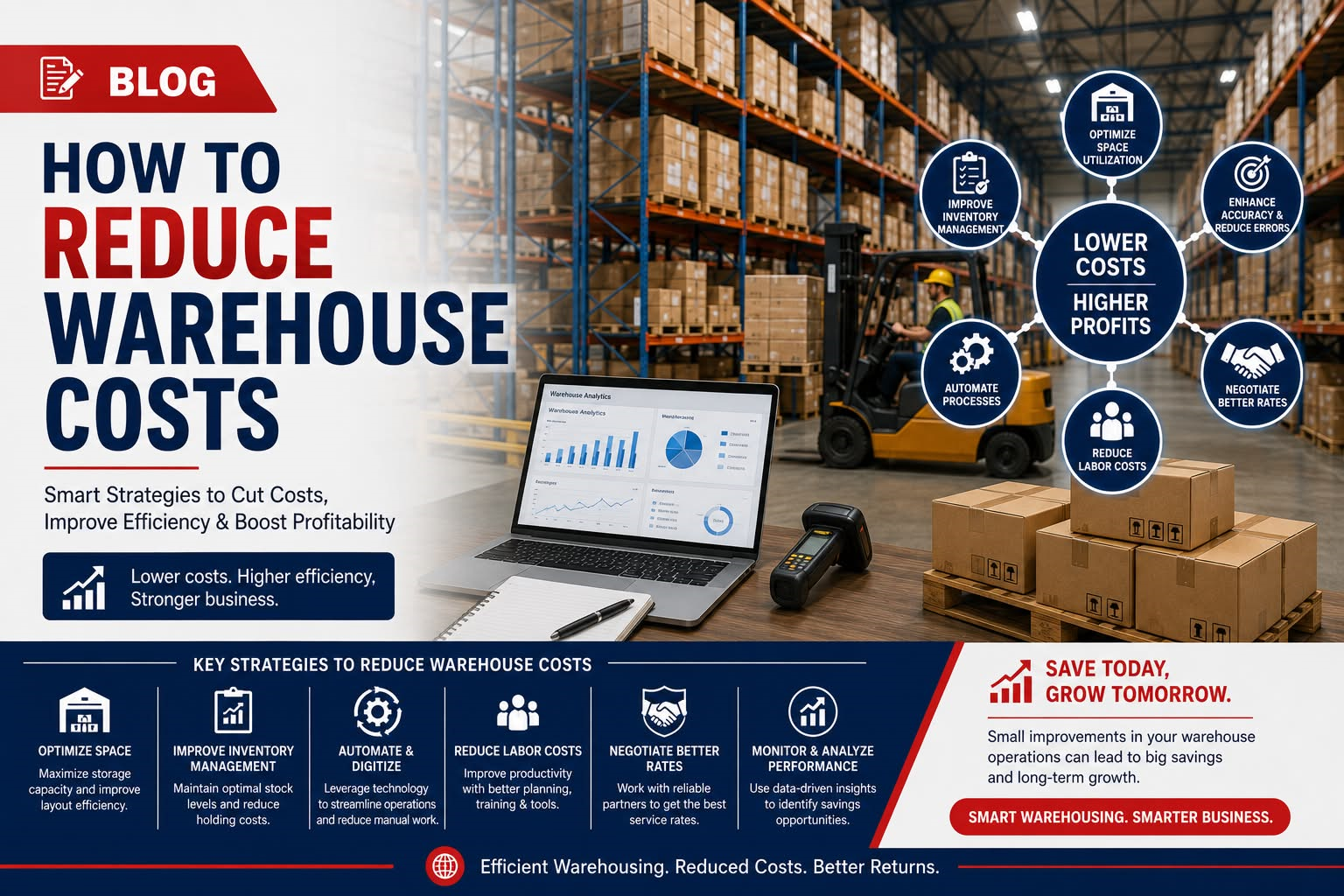
How to Reduce Warehouse Costs
Warehousing is an important part of the supply chain, but operational expenses for businesses. From labor to storage and transportation, warehouse costs quickly rise if the operations are not managed properly. Whether you are running a retail company, an ecommerce business, a distribution center, or a manufacturing unit, you must reduce the costs and maintain warehouse efficiency for long-term profitability.
Make sure to reduce the costs without disrupting your operational efficiency and optimize resources well. You should rent the well-managed warehouse to reduce expenses and improve delivery speed, order accuracy, and customer satisfaction. Let us read this blog and know the warehouse cost reduction strategies.
What are the warehouse costs?
The warehouse costs include expenses for running and maintaining a warehouse facility and put impact on your profitability. You must understand the costs to cut expenses, increase efficiency, and lead smart decisions for your business.
How To Reduce Warehouse Costs in 2026
Here are the warehouse cost reduction tips you can follow to save warehouse costs and boost profitability in 2026
Analyze Your Warehouse Operations
Analyze your warehouse operations regularly to find inefficiencies, improve resource use and processes, and save costs. Make sure to conduct regular warehouse audits, use data-driven performance metrics and a warehouse management system (WMS), and get feedback from your employees to optimize costs.
Evaluating Your Transportation Costs
Reviewing the transportation practices also helps to save warehouse costs. You can negotiate better rates with freight carriers or streamline routing and delivery schedules. To analyze the transportation costs effectively, you should analyze historical shipping data, track delivery frequency and accuracy, and review current contracts with freight carriers properly.
Maximize Space
Another logistics cost-saving tip is to use the maximum space. Efficient usage reduces the need for a larger facility and lowers energy expenses. To maximize space, you should use efficient warehouse storage solutions, such as vertical lift modules (VLMs), and integrate a WMS for strategic product placement.
Follow Cross Docking
Cross-docking is another effective warehouse cost reduction tip. It involves moving products directly from a manufacturer or supplier to a retail chain or customer. Incoming and outgoing docks allow products to be received and immediately transferred to trucks for delivery.
Standardized Palletization & MHE Optimization
Considering using purchasing used containers during shipping or storing your inventory. It includes the like shipping or storing your inventory, and saves your costs in warehousing.
Use the Benchmarking Technique
Benchmarking allows you to compare your key performance indicators (KPIs) against those of other warehouses in your industry and identify improvement areas. To save the warehouse costs by benchmarking, you should identify warehouse KPIs, such as order accuracy and inventory turnover.
Protect Your Inventory
Failing to protect inventory is the biggest reason behind financial loss. So, for logistics cost saving, you should protect inventory like stock damage and theft. If you are unable to protect your inventory, then you risk financial loss.
Optimize RTO Processing and Compliance Costs
Return to Origin (RTO) and reverse logistics drain up to 30% of your operational budget in the Indian e-commerce landscape. It is because of the repetitive handling, unpacking, and quality checks.
Maximize Your Equipment
Another way to reduce warehousing costs is by maximizing your equipment and ensuring that it is run at full capacity. To get most of it, you should use predictive maintenance, monitor your equipment, and track how each machine is in idle or use to reduce unnecessary wear and tear.
Implement Warehouse Automation
Warehouse automation reduces costs in the long run. It increases warehouse efficiency, reduces costly product damage, avoids human error, and reduces costs.
It keeps the high-turnover items close to shipping areas, reduces retrieval times, and optimizes costs.
By doing this, you can remove the need for a middleman and reduce costs. It also reduces the need for extra storage space and reduces handling. You should use the logistics software to track real-time shipments, implement cross-docking, and predict arrival and departure schedules. You should also designate specific zones in your warehouse for inbound and outbound activities to improve goods flow.
Moreover, you should also gather data from warehouses in your industry through reports or surveys and analyze the differences and similarities between your warehouse's performance and the benchmarks.
For this, it is suggested to install CCTV cameras, hire security guards, and limit access to areas with valuable inventory. You can also train employees to handle inventory correctly to reduce accidental damage. Restrict access to storage areas that hold high-value inventory to help prevent theft.
You should reduce the costs by implementing automated gatekeeping during return initiation. It is suggested to ensure 100% compliance with E-Way bills and local state logistics regulations to avoid heavy fines and transit delays that impact detention costs.
It not only optimizes the equipment usage, but also saves your warehouse costs.
How Technology Can Help to Reduce Warehouse Costs
Technology plays a vital role in saving warehouse costs. Here is how it can save costs
- Warehouse Management Systems (WMS)
You can use the WMS to manage warehouse costs. It can automate processes like order fulfillment and inventory tracking. It also reduces errors, saves labor costs, streamlines operations, and allows you to leverage real-time data analytics for cost savings. - Cost Benefits of Real-Time Data Analytics
By using WMS, you can get real-time data, identify inefficiencies, and monitor inventory more effectively. It leads to smarter decisions, controls over cost, and optimize resource. - IoT And Smart Warehousing For Operational Efficiency
The Internet of Things (IoT) is another game-changer for warehouses. With connected sensors and devices, you can monitor everything from stock levels to equipment performance instantly. This visibility allows businesses to identify inefficiencies before they become costly problems to fix.
Cost-Reduction Framework
Reducing warehouse costs requires optimizing storage, labor, operations, and inventory management. Businesses that find key cost drivers and make targeted improvements can improve warehouse efficiency while keeping the supply chain running smoothly. Here is the table that shows the cost-reduction framework and helps to understand common warehouse expense areas and immediate actions to lower operational costs.
| Cost Category | Primary Cost Driver | What to do? | Business Impact / ROI |
|---|---|---|---|
| Storage / Space | Dead stock, unutilized vertical height, slow-moving SKUs | You should install selective or Drive-In Vertical Racking; run automated age-analysis to liquidate dead stock. | Increases floor capacity by up to 50% without expanding the physical warehouse footprint. |
| Labor & Picking | Wasted walking time, high picking error rates, and manual sorting. | Introduce zone picking layouts and deploy intelligent batch picking paths via WMS. | Reduces total labor hours by 30% and saves order rectification costs. |
| Logistics & RTO | Failed deliveries, high freight shipping zones, and manual NDR tracking | Partner with a unified fulfillment network for zonal inventory splitting; use automated WhatsApp/IVR for COD verification. | Reduces shipping costs, keeps product return (RTO) rates under tight control. |
| Energy & Utilities | Inefficient lighting, outdated high-power machinery, and continuous HVAC run-time. | Transition to motion-sensor LED lighting; deploy smart industrial HVLS fans. | Cut monthly warehouse utility and power bills by up to 25-35%. |
| Material Handling | Frequent forklift breakdowns and improper battery charging cycles. | Implement strict predictive maintenance schedules for all MHE (Forklifts, Reach Trucks). | Save costly operational downtime in peak sales seasons and extend equipment lifespan. |
"Smart Cost Reduction = Higher Profitability"
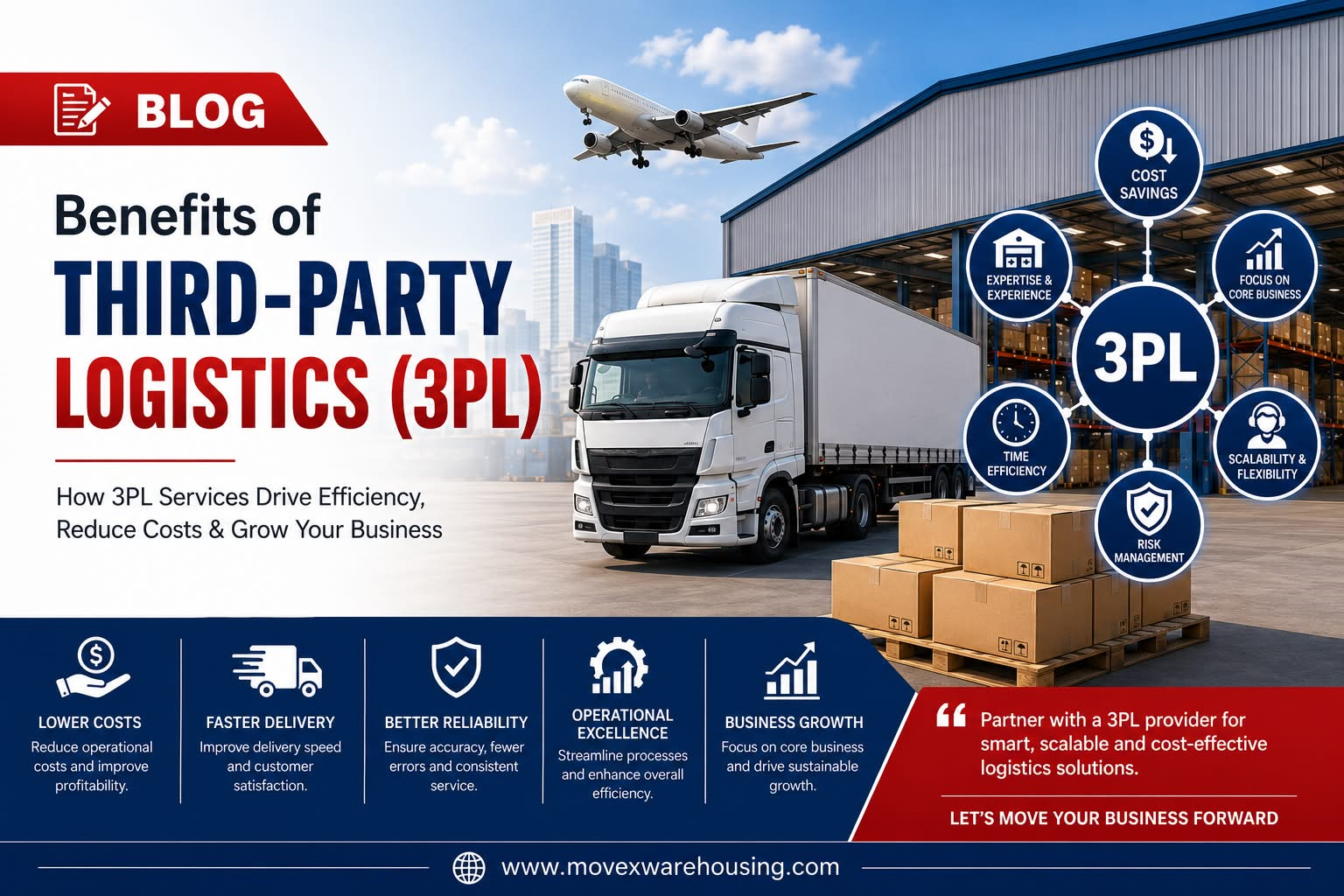
Reducing warehouse costs isn't just about reducing expenses, but also about improving efficiency, optimizing resources, and using smarter logistics strategies. From automation to optimizing warehouse layout to managing inventory and working with 3PL partners, there are various ways for your business to reduce costs and maintain high-performance operations.
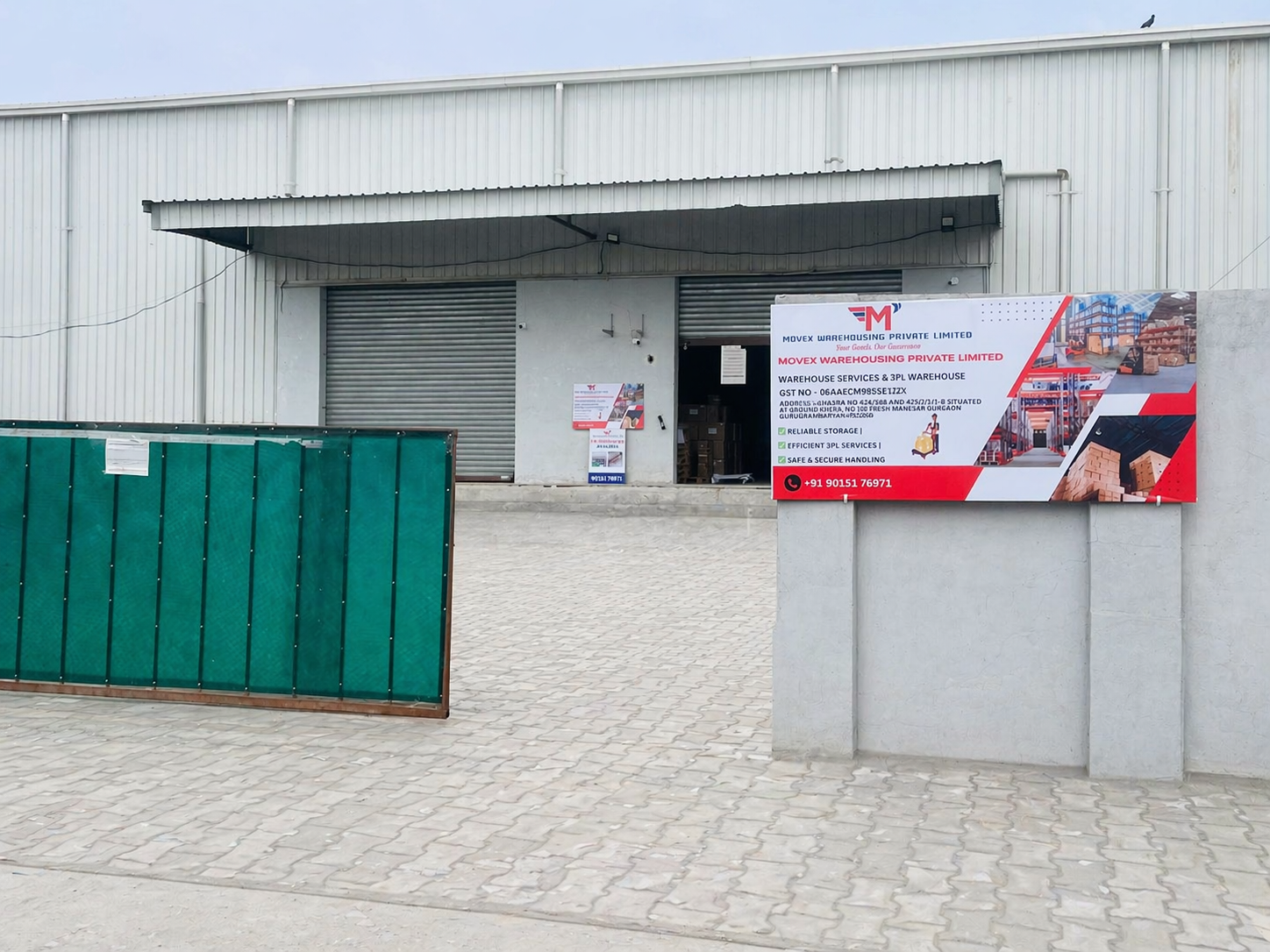
Movex Warehousing – Your Cost Optimization Partner
Conclusion
Reducing warehouse costs isn't just about reducing expenses, but also about improving efficiency, optimizing resources, and using smarter logistics strategies. From automation to optimizing warehouse layout to managing inventory and working with 3PL partners, there are various ways for your business to reduce costs and maintain high-performance operations.
Another benefit of storage cost management is that it boosts profitability, improves customer satisfaction, and builds a stronger supply chain foundation for optimal growth. So if you want to improve your warehouse operations and stay competitive in today's demanding market, then you must reduce the warehouse costs and follow the above structural framework.
Frequently Asked Questions (FAQs)
How to reduce warehouse operating costs?
You can reduce warehouse costs by improving inventory management, optimizing storage space, using automation, and cutting energy consumption. It is suggested to partner with the experienced 3PL providers for efficient logistics and get warehouse cost reduction tips.
Does warehouse automation reduce costs?
Yes, warehouse automation helps to reduce costs by lowering human errors, speeding up fulfillment, improving order accuracy, and increasing efficiency. It delivers long-term savings to your business.
Why is inventory management important in warehouses?
Inventory management is important for a warehouse because it keeps your overstocking in check, lowers storage costs, avoids stock shortages, and enhances order fulfillment. By giving you proper control over your business operations saves costs and increases profitability.
How does a 3PL provider reduce warehouse costs?
A 3PL provider offers flexible storage solutions, shared warehousing, advanced logistics technology, and optimized transportation networks, and helps to cut operational expenses without sacrificing efficiency or customer satisfaction.
What is the biggest challenge in storage cost management?
The main challenge in storage cost management is creating a balance between cost reduction and efficiency while ensuring inventory accuracy, customer satisfaction, and timely delivery. Handling all these things together is challenging, so you should hire trusted logistics partners like Movex Warehousing.