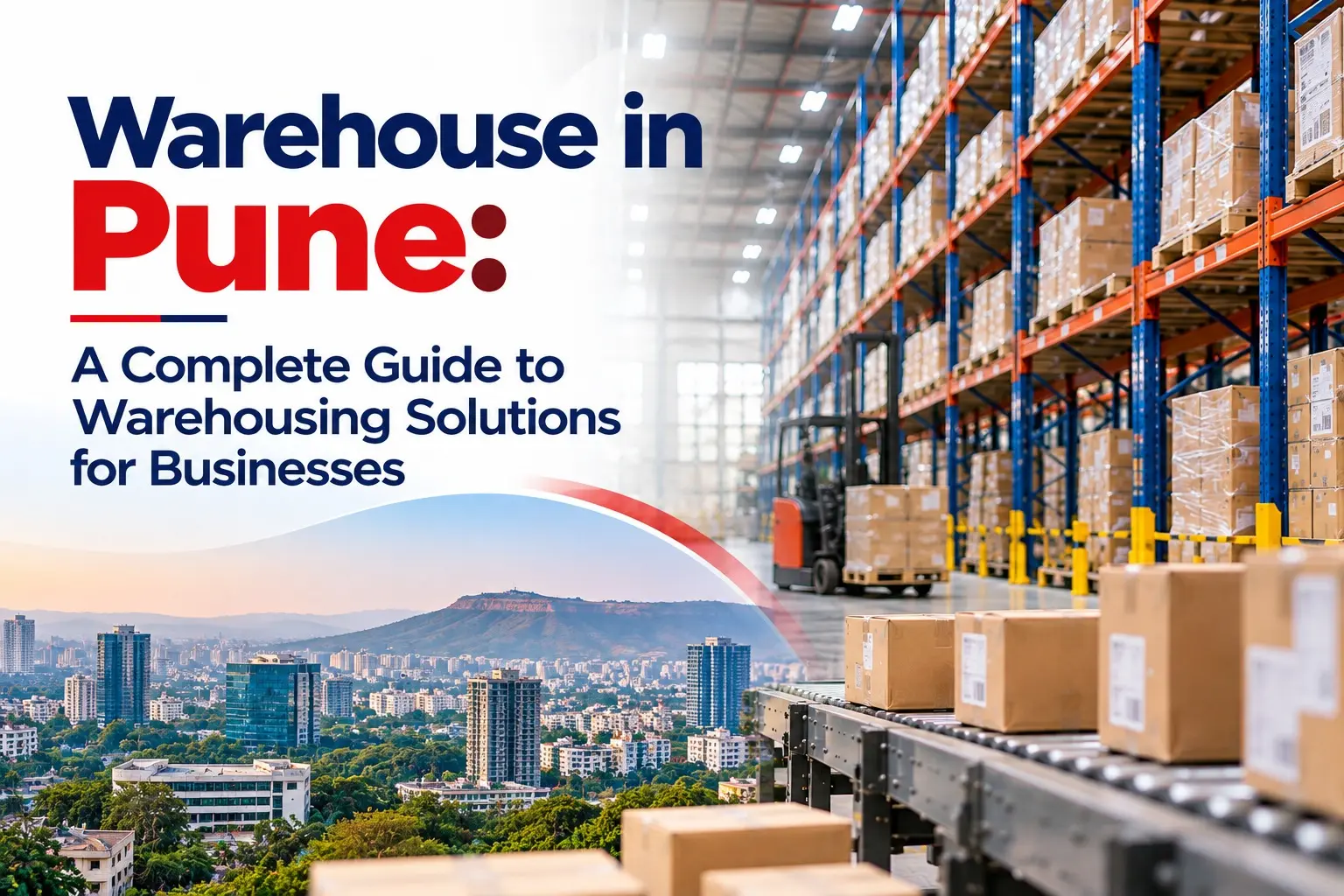

How to Choose the Right Warehouse in Hyderabad for Your Business
Hyderabad is now a significant logistics hub in India because it is situated in a central position in the south of the country and enjoys good rail, road, and air links. A number of industries, D2C brands, and e-commerce companies have set up their operations there as they need plenty of space for storing goods and for delivering the products to their destinations on time.
The warehousing companies based in Hyderabad are located in a strategic position and offer secure storage. They also deal with returns efficiently, which helps businesses manage their orders without any disruption.
Why Hyderabad Is a Leading Warehousing and Logistics Hub
Hyderabad has now become one of the strongest warehousing and distribution centres in India because of its strategic position, which makes it very convenient for companies to serve various areas such as Telangana, Andhra Pradesh, Karnataka, Tamil Nadu, Maharashtra and other adjacent states.
The city has good links to the national highways, the Outer Ring Road, the railway system, and Rajiv Gandhi International Airport. Several industries continue to expand in Hyderabad, including:
- Automotive and Aviation
- E-Commerce and FMCG
- Electronics and IT
- Retail and Textiles
- Manufacturing and Wholesale Distribution
How to Choose the Right Warehousing in Hyderabad?
Here are the factors to consider to choose the right warehouse in Hyderabad.
1. Select the Right Warehouse Location
The location you choose affects the transport costs, delivery times, and the ability to access suppliers. If you are evaluating a warehouse in Hyderabad, then you should look at how far it is located from the manufacturing sites, customer markets, highways, and appropriate transport hubs.
How suitable each location is will depend on the kind of operation you are performing; you should compare the traffic conditions, truck access, the toll costs, the delivery distances, and the availability of appropriate warehouse space before making the decision.
2. Evaluate the Size of the Warehouse and Its Storage Capacity
The warehouse must be able to hold your present inventory without obstructing movement or leading to high rental costs. Calculate the total amount of storage space needed on the basis of the volume of stock, the dimensions of the products, the number of pallets, and the increase in inventory.
A warehouse whose layout has been well designed can lead to better use of storage and less unnecessary movement. Do not choose a facility only on the basis of the total amount of square footage. You should evaluate how much of that space can actually be used for your operations.
3. Check Infrastructure and Facilities
The warehouse's infrastructure has a direct impact on productivity, safety, and the level of protection offered to inventory. When you are about to sign a lease, you should check the building and ensure that its specifications meet your requirements for storage and handling.
Choose appropriate flooring, sufficient lighting, good ventilation, effective drainage, loading docks, and dependable electricity. If your operations involve the use of forklifts or pallet-moving equipment, you should check the width of the aisles, the turning spaces, and the availability of charging or maintenance facilities as needed.
It is also important to have fire detection and suppression systems, emergency exits, and suitable safety measures. Businesses that deal with sensitive products may need temperature monitoring, controlled storage conditions, or further environmental protection.
4. Check Legal Compliance and Documentation
Before you rent a warehouse, ensure that the property is approved for the commercial or industrial purpose for which it is to be used. You should check the ownership or lease agreements, the building approvals, the relevant fire safety regulations, and any other permissions applicable to the facility.
Businesses should also examine their GST records, insurance coverage, and any particular requirements of the industry. Depending on the products and the activities involved, pharmaceuticals, foodstuffs, chemicals, and hazardous materials may need extra licences, storage controls, or safety measures.
Make clear who is responsible among the landlord and the warehouse operator for performing the maintenance, inspections, repairs, and ensuring compliance. Having proper records will help to lower legal risks and avoid any unnecessary disruptions once the operations start.
5. Compare the Rental Costs and Lease Terms
Although warehouse rent is an important factor, the least expensive property doesn't necessarily result in the lowest total operating costs because a facility that is located far away will lead to higher fuel expenses, longer delivery times, and greater vehicle utilisation costs. You should compare the following costs before choosing the warehouse.
- Monthly rent — Rent per square foot and total usable area
- Security deposit — Amount, deductions and refund conditions
- Maintenance — Building upkeep and common-area charges
- Utilities — Electricity, backup power and water
- Labour — Loading, unloading, packing, and handling
- Transportation — Fuel, tolls, and delivery expenses
- Equipment and technology — Racking, forklifts, and inventory systems
- Other charges — Applicable taxes, insurance, and additional fees
You should review the lease duration, annual rent escalation, renewal terms, notice period, and exit conditions. Ask for a written quotation that separates the base rent from additional expenses. You should also compare the total operating costs of every warehouse against the services and facilities provided.
6. Evaluate the Vehicle's Accessibility and Connectivity
The efficient running of warehouse operations relies on the seamless movement of goods and commercial vehicles. The site must have appropriate entry points, internal roads, loading bays, and enough space for trucks to move about safely.
Ensure that heavy vehicles are allowed smooth access to the property, because it affects deliveries. Also take into account the property's closeness to the Outer Ring Road and the major highways that are relevant to your distribution routes. When your business is making frequent shipments, you should look at the loading and unloading schedules, the parking availability, and the time that vehicles take to enter and leave the facility.
For businesses which serve customers all over Telangana or in the adjacent states, good highway connectivity can help with regional distribution. The level of access should be assessed with congestion, toll charges, and the position of your principal customers.
7. Assess the Security and Inventory Protection
Warehouses need to protect their products against theft, damage, unauthorised access, and exposure to environmental hazards. You should look for CCTV cameras, check the entry points to see if they are properly controlled, look into the presence of security staff, ensure that there is sufficient lighting, and verify that there are written procedures for receiving and dispatching goods. Ensure that the operator keeps inventory records and looks into any discrepancies in stock.
8. Think About Scalability and Future Expansion
Your needs regarding warehouse space may rise as your business increases, as you introduce new products, or as you enter new markets. If you select a facility which does not allow for expansion, you may have to pay for relocation and will experience operational disruption.
You should look for warehouses that provide flexible arrangements of space, extra storage capacity, and services capable of handling larger inventory volumes. Businesses whose demand is seasonal should also consider arranging for temporary storage during the peak periods.
9. Verify the Labor Availability and Obtain Operational Support
The amount of productivity achieved in a warehouse is based on having access to workers who are able to look after receiving, sorting, packing, stock movement, and dispatch. Before choosing a site, you should assess the availability of suitable labour and how easy it is to arrange transportation for the staff.
Look at the distance from residential areas, industrial employment zones, and public transport routes, and also check if the facility has adequate staff amenities, safe working conditions, and enough space for operational activities. Find out from the warehouse provider regarding their staffing plans, the flexibility of shifts, their training procedures, and who is responsible for labour management. Having reliable operational support will help to keep productivity high and ensure that dispatch schedules are met.
10. Assess the Warehouse Technology and Automation
Technology has the ability to improve stock visibility, decrease handling errors, and enable faster order processing. When you are evaluating a warehouse in Hyderabad, you should check if its systems meet your inventory management and distribution needs.
Automation can also be used to perform repetitive jobs such as sorting, packaging, and moving materials, according to the particular facility and business model.
Find out if the provider includes these systems in its service charges or if it requires a separate investment. Also check how often the inventory reports are updated and how discrepancies are dealt with. You should select a technology that meets the real needs of your operations rather than purchasing features that your business might not need.
Conclusion
Hyderabad is one of India's major logistics hubs. Because of its strong infrastructure, industrial growth, and good connectivity, it is a suitable place for businesses that want to improve their supply chain performance.
The right warehouse can reduce costs, speed up deliveries, improve inventory control, and support business growth. If you want to expand your operations, then working with a Warehousing and Logistics Company that has experience in Hyderabad can help you to set up a smarter, faster, and more reliable supply chain.
If you select the best warehouse in Hyderabad, you can guarantee that your goods will be stored safely, delivered on time, and efficiently managed throughout the supply chain.
FAQs
What is the reason for choosing a warehouse in Hyderabad?
Hyderabad has excellent road, rail, and air links and enjoys easy access to the major markets in South India. This makes it a suitable location for logistics.
What services does a 3PL warehouse in Hyderabad offer?
A 3PL warehouse in Hyderabad provides storage, inventory management, order fulfillment, picking, packing, transportation, reverse logistics, and value-added warehouse services.
How to select the appropriate warehouse location in Hyderabad?
You should look for the warehouse location near your customers, suppliers, and transport routes. Also think about delivery times, storage needs, and possible growth for your business.
Can a warehouse support same-day delivery?
Yes, if a warehouse is well located and has an efficient logistics network, it can support same-day delivery. It can reduce transportation costs.
Why should businesses select Movex Warehousing?
Movex Warehousing offers flexible warehouse services, advanced inventory management, and modern infrastructure. Reliable 3PL warehousing solutions in Hyderabad help businesses improve their efficiency and grow with confidence.