How AI and Smart Inventory Management Are Transforming Modern Warehouses
Warehouse management is an important part of supply chain operations. It ensures that products are stored, organized and delivered in an efficient manner. An effective Smart warehouse management system in India allows your business to meet customer demands and get a competitive edge in the market.
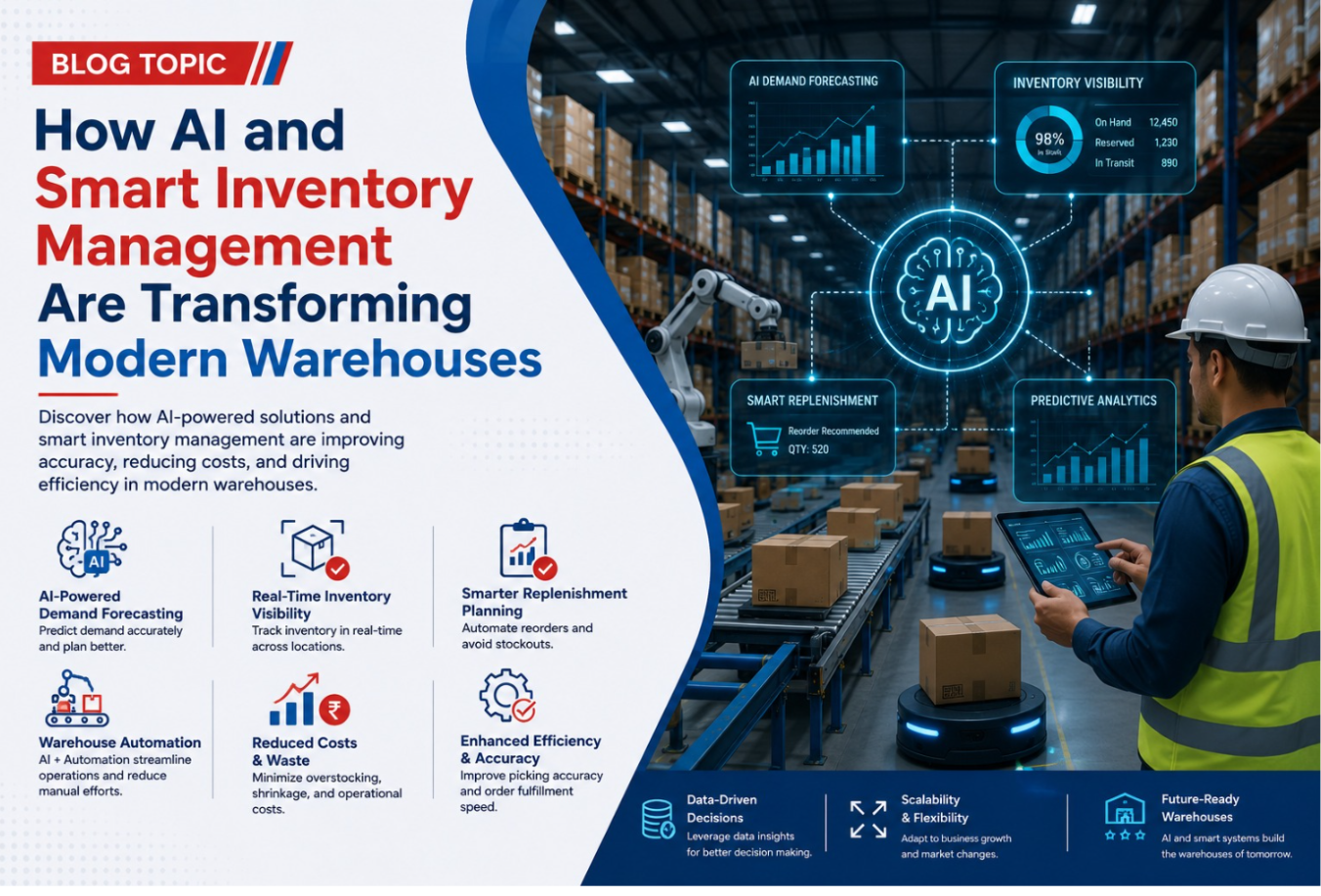
AI streamlines the inventory and transforms the Warehouse management. It automates the tasks, forecasts demand, and optimizes storage space. It also improves order fulfillment, logistics and quality control process. In this blog, we tell you the role of AI and smart inventory management in transforming the warehouse industry. here we also tell you the trends and technologies that shape the warehousing industry future.
Understand Current Warehouse Challenges
As warehouse operations changed over time, several key challenges occurred. AI and WMS software help to tackle these issues, automate manual tasks, and streamline operations. Here are some major challenges that AI and real-time data can help resolve.
- Overstocking and Stockouts
Overstocking ties up capital that could be used more efficiently elsewhere. It increases holding costs and increases the risks of dead stock. In contrast, stockouts are detrimental to profits. You cannot fulfill an order, which may drive your customer to your competitor. - Inefficient Space Utilization
Warehouses and product mixes change, and cause inefficiencies in layouts and space use. Cluttered storage areas, poor inventory management, and long travel times also increase your operational and labor costs. - Weak Labor Allocation Planning
Another challenge lies in the weak labor allocation planning. Human workers can make up about 65% of total fulfillment costs. When your team is not allocated effectively, you're losing money.
How is AI used in warehouse management?
AI transforms the warehouse operations by streamlining workflows, optimizing resources, and improving decision-making in real time. Here's how the Smart warehouse management system India works:
- Task Prioritization & Labor Optimization
AI assigns tasks to workers or robots on the basis of order priorities, real-time inventory levels, and worker availability. It enhances throughput, reducing dispatch errors and idle time. - Intelligent Robotics & Automation
AI-powered robots come with vision systems and help you to pick, pack, and transport items accurately. It also reduces human error and boosts productivity. - Predictive Maintenance
AI analyzes equipment use and sensor data to predict when systems, like forklifts or conveyors, need maintenance, which avoids downtime and improves safety. - Dynamic Slotting
AI evaluates movement data to suggest better storage locations, reduces travel time and improves pick efficiency. - Visual Inspection & Quality Control
In a warehouse, AI-driven vision systems check items for damage or errors during receiving, picking, or packing, improving accuracy and customer satisfaction.
How is AI used in logistics management?
In logistics management, AI connects systems, carriers, and customers, turning your transportation network into a responsive, intelligent, and resilient system. Let us tell you how AI is changing the warehouse and logistics industry.
- Route Optimization & Dynamic Rerouting
AI technology can analyze real-time traffic, weather, delivery windows, and historical patterns and help you find the most efficient routes. If conditions change, it also helps to reroute drivers, reduce delays and fuel usage. - Predictive Delivery & ETA Accuracy
The another way how does AI used in logistics management is through Predictive Delivery & ETA accuracy. It can predict the estimated time of arrival (ETA) for shipments by considering everything from driver behavior to road conditions, and improve logistics planning and customer satisfaction. - Freight Pricing & Load Optimization
AI optimizes loads and chooses the most cost-effective carrier based on capacity, fuel costs, historical rates, and shipment urgency. Hence, it enhances margins and reduces waste. - Shipment Tracking & Exception Management
AI monitors in-transit shipments across different carriers, flagging delays or damages. It can then trigger automated workflows, such as alerts, rerouting, or escalations, to address issues proactively and improve supply chain visibility. - Demand-Sensitive Carrier Selection
AI selects the best carrier or mode (truck, rail, air, etc) on the basis of demand hikes, capacity constraints, service levels, or seasonal factors, and balances cost and speed. - Supply Chain Risk Prediction
AI also beneficial logistics industry by scans global data and predict potential risks, from political instability to port congestion or supplier disruptions. It also recommends alternative paths or suppliers before issues arise and streamlines your operations.
How AI Improves Inventory Management in Warehouses
Here is how the AI improves the Smart warehouse management system India:
- AI's Role in Inventory Management
Managing inventory is a complicated task. whether it is tracking stock levels, ensure order fulfilled on time, and anticipate demand, this process is crucial for smooth warehouse operations. Here, the AI in warehouse management helps. Businesses can use AI to automate tasks and make inventory management faster, accurate, and efficient. - AI-Driven Tools for Demand Forecasting and Stock Replenishment
AI-driven tools transform how warehouses track stock. These tools use machine learning algorithms that process large data sets to predict demand more effectively. Instead of relying on traditional methods like historical data or manual counts, AI forecasts future business needs on the basis of seasonal changes, trends, and market conditions. - Reduce Human Errors and Improve Accuracy
Another benefit of AI in inventory management is that it reduces human error. Manual stock tracking can result in mistakes, like misplaced items, incorrect counts, or missed shipments. AI in warehouse management reduces these errors by automating repetitive tasks and providing real-time data with a high degree of accuracy. By integrating AI with barcode scanners or RFID tags, warehouses can easily track stock movements, ensuring that inventory data is accurate and current. This leads to fewer mistakes, better inventory accuracy, and smoother operations.
AI Technologies Transforming Inventory Management
AI transforms inventory management through various innovative applications. In fact, AI-enabled supply chain management improves inventory levels by 35%. This improvement is due to ML algorithms, computer vision technology, and natural language processing. Here are the technologies by modern tech-enabled warehouses:
- ML algorithms
Machine learning algorithms analyze market trends, historical data, and external factors and offer highly accurate demand forecasts. It helps your business to optimize stock levels and reduce overstock and stockout situations. - Computer vision technology
Another technology that transforms the inventory management in a warehouse is computer vision technology. It enhances real-time inventory tracking by using cameras and image recognition to identify products, monitor stock levels and detect discrepancies. It ensures accurate inventory information without manual counting. - Natural language processing
NLP streamlines communication within the supply chain by interpreting and generating human-like text. It can automate order processing, manage customer inquiries, and improve coordination between different departments.
The Future of Warehousing: Key Trends and Technologies
Here are the latest trends and technologies to adopt in warehouse management:
- Automated Warehouse System: Automation of labor-intensive tasks with real-time insights, which reduces dispatch errors.
- Internet of Things (IoT): Devices and sensors for real-time monitoring and data collection.
- Blockchains: Secure transactions and traceability across supply chain businesses.
- Augmented Reality (AR): Enable virtual simulations and improve picking accuracy and training.
- Predictive Analytics: AI-powered insights for demand forecasting and inventory optimization.
- Cloud Computing: Scalable and accessible data storage and processing solutions.
- Autonomous Vehicles: Automated guided vehicles (AGVs) for efficient material handling.
- Sustainable Warehousing: Energy-efficient technologies and eco-friendly practices for sustainable operations.
Real-World Examples of AI in Warehouse Management
Various global companies like Amazon, Walmart, and DHL are using AI to improve warehouse efficiency, fulfillment speed and inventory accuracy.
Amazon
Uses AI, ML and robotics across its fulfillment centers. Over 750,000 mobile robots move shelves for workers and save travel time. AI forecasting helps to analyze demand for millions of products every day.
Walmart
Uses AI to improve supply chain planning and inventory management. The Eden AI system works to analyze product images and assess produce freshness and reduce food waste. Automate around 65% of its fulfillment centers using AI-powered robotics. AI systems adjust replenishment and inventory in real time during a demand surge.
DHL
Uses AI-driven vision picking to guide warehouse workers. Productivity rises by 25% or more in pilot programs. AI route optimization reduces employee travel distances by up to 50%. Simulate warehouse operations by using digital twins before making changes.
"AI: The Brain Behind the Smart Warehouse"
AI and smart inventory management transform the warehouse operations in the world. Businesses can adopt the smart warehouse management system in India to enhance productivity, optimize resources, and improve customer satisfaction. From automated inventory management to better supply chain visibility, AI helps companies build modern tech-enabled warehouses that are smarter, scalable and faster. As technology adopts, it becomes important for companies to invest in AI-driven warehousing solutions and get long-term business growth.
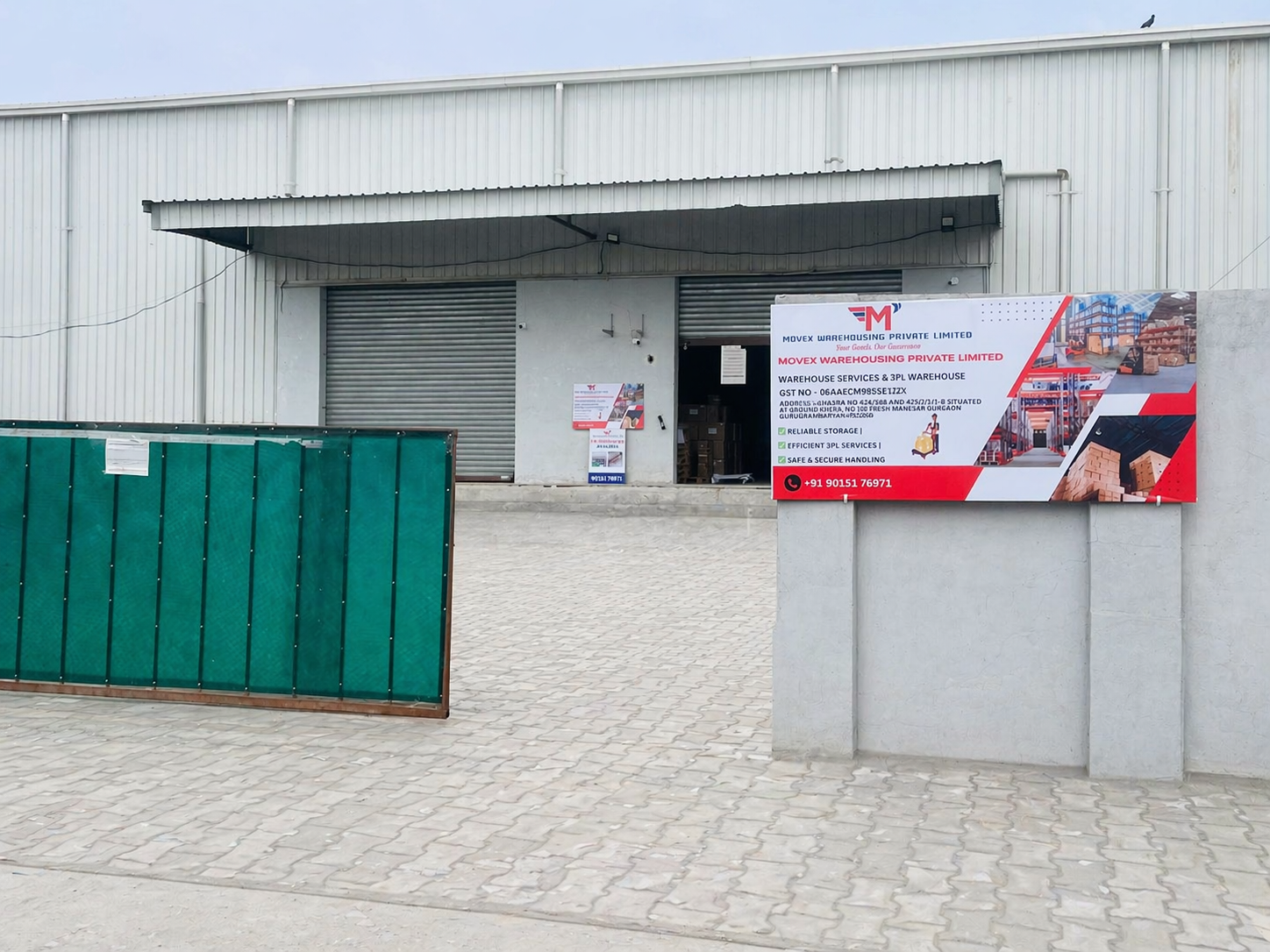
Movex Warehousing – Your Tech-Enabled Logistics Partner
Conclusion
AI and smart inventory management transform the warehouse operations in the world. Businesses can adopt the smart warehouse management system in India to enhance productivity, optimize resources, and improve customer satisfaction. From automated inventory management to better supply chain visibility, AI helps companies build modern tech-enabled warehouses that are smarter, scalable and faster. As technology adopts, it becomes important for companies to invest in AI-driven warehousing solutions and get long-term business growth.
Frequently Asked Questions (FAQs)
1. What role does AI play in warehouse automation?
AI plays a vital role in warehouse automation by integrating machine learning, robotics and data analytics. It enables the accurate order picking, real-time monitoring and inventory management at your warehouse unit.
2. How is AI used in warehouses?
AI is used in warehouses for optimized order fulfillment, inventory tracking, forecasting demand, managing labor and performing automated inspections.
3. How is AI used in inventory management?
AI is used in inventory management through real-time data analytics, demand forecasting, automating reorder points, and optimizing the supply chain efficiency.
4. What are the benefits of real-time inventory tracking?
The real-time inventory tracking improves visibility, enhances stock accuracy, reduces delays and facilitates fast order fulfillment.
5. How does technology improve warehouse efficiency?
Technology can improve warehouse efficiency by implement WMS software, use AI analytics, automate inventory management and integrate real time tracking systems.